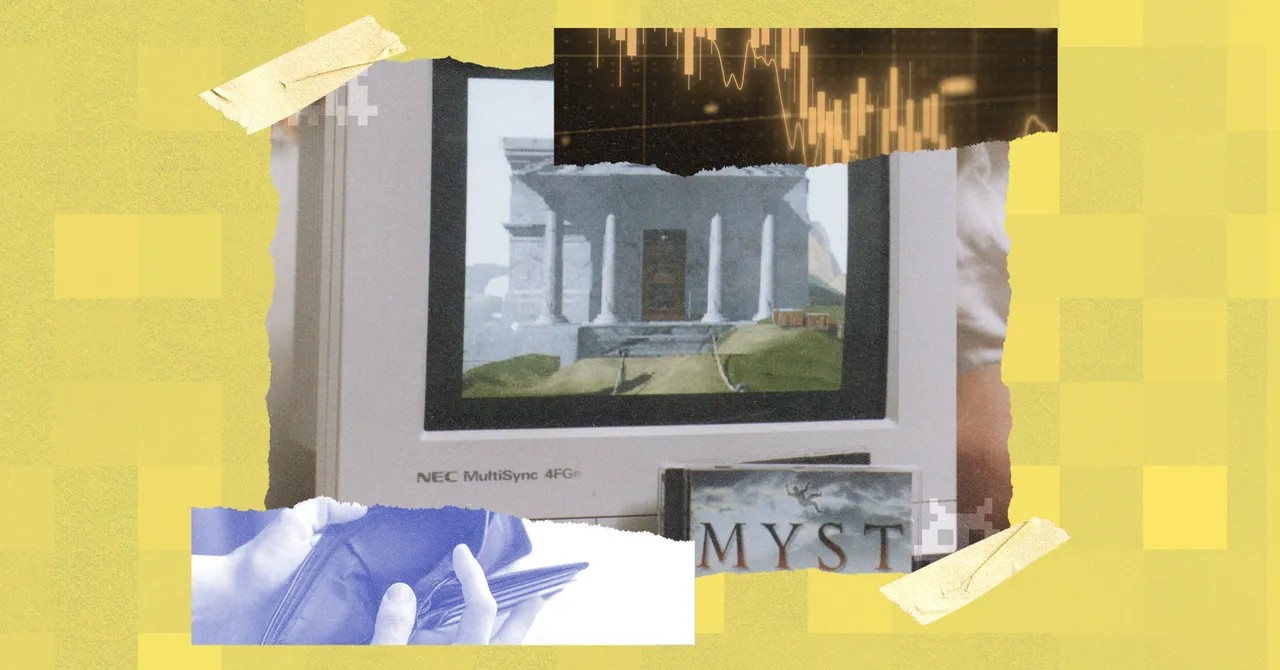
How mid-budget game development is collapsing, leaving studios like Cyan Worlds with no choice but to cut staff and shelve ambitious projects. The Myst creators have a trailer for a dark, hostage-themed sequel called Anglerfish. It’s stunning. Noshir Dalal (Ghost of Yōtei ) is in it. The concept is tight. But the game doesn’t exist. It died before it was born because no one could afford to fund it.
This isn’t just bad luck. It’s a structural collapse of the video game industry’s middle class.
The Middle-Market Collapse: Why No One Makes $1M-$10M Games Anymore
The 1990s were a golden age for Myst. The puzzle adventure sold over six million copies. WIRED even credited the franchise with sparking the CD-ROM boom. It held the title for best-selling PC game of all time until The Sims broke the record in 2002.
Last week, Cyan Worlds released a trailer for Anglerfish. A codenamed project, it’s darker. You’re held hostage in a strange world by a writer with a temper. The production values are high. The reactions on YouTube were ecstatic.
There is one problem.
Cyan pitched Anglerfish at last year’s Game Developers Conference (GDC) and the D.I.C.E. Summit. They spent four months building a fully playable demo. They talked to more than a dozen publishers. Eric A. Anderson, Cyan’s creative director, said even those who liked the project couldn’t get their bosses to release the cash.
“Funding for double-A games has evaporated,” said John Eternal, former PlayStation partner development lead. “If we were pitching this a few years earlier, it would have a no-brainer.”
Cyan hoped for between $1 million and $10. They got nothing. They put the project on ice. They laid off 12 employees. That’s half their staff.
The industry is polarizing. At the top, triple-A studios like Rockstar (GTA VI ) and Naughty Dog (The Last of Us ) spend over $200 million per title. At the bottom, micro-indies spend under $1 million. The middle is gone.
Why Venture Capital Stopped Funding Indie and AA Games
Where did the money go? Interest rates.
When the Federal Reserve kept rates near zero after the Great Recession and during the pandemic, investors took risks. They poured money into games. In 2021, venture capital funding peaked at $12 billion. By 2023 and 24, it had crashed by more than 75 percent. It hovered under $3 billion.
“Money just got too expensive to borrow. Publishers looked at their capital and said: ‘This is all we have. Let’s be conservative.’”
Publishers are stretching every dollar. They aren’t building Anglerfish. They are pulling a slot machine. They are looking for the next Balatro.
That rogue-like deck builder was made by one person in their spare time. It became profitable in 60 minutes. It sold 5 million copies in a year. It’s the new safe bet.
Doug North Cook, CEO at Creature, said the space between $2 million and $15 million is now very hard to hit. Xbox Game Pass and traditional publisher deals used to prop up this middle ground. Now? They pivoted. They want micro-budgets.
Discovery Crisis: Steam Flooded With AI Slop and Low-Quality Games
Even if a publisher has the cash, they don’t know how to sell the game.
Platforms like Steam were once gatekeepers. Now, they are dumps. The AI Transparency Index shows over 18,000 Steam games now disclose AI usage. The store is flooded with low-quality dreck.
User trust in curatorial layers has vanished. When players see ads and slop, they check out. This kills discoverability. It makes marketing costs prohibitive. Publishers won’t take the risk because they can’t get noticed in the noise.
John Austin, founder of Pontoco (The Last Clockwinder ), said many indie studios are shrinking their scope or closing. They can’t compete with the volume.
How Crowdfunding and Micro-Budgets Are Filling the Void
So, what’s a developer to do?
Some turn to non-traditional routes. Masi Oka, founder of Outer Wilds developer Mobius Digital, pointed to new fund initiatives. Outersloth, Blue Ocean Games, Midgame Fund. They are promising alternatives to old-school publisher deals. But they only work for smaller budgets.
Crowdfunding platforms like Kickstarter, Indiegog, and Patreon are also options. But the payouts are limited. They rarely exceed $1 million.
“I don’t think people realize the real cost of developing games. A million dollars seems like a ton, but it doesn’t cover a production like Anglerfish.”
That quote comes from Eric A. Anderson. He used Kickstarter to partially fund past Cyan titles. The math doesn’t work for big dreams anymore.
Tonda Ros, developer of Blue Prince —an indie darling inspired by Myst —went a different route. He used personal savings and ad revenue from his Magic: The Gathering website. He finished the game before approaching publishers. He just needed help with marketing and ports.
Ros says Myst and its sequel Riven made a profound impact on his work. But he recognizes the current landscape. The grand scale and cinematic realism of old-school adventures is too steep an ask.
“I’m going to keep my aspirations and scope small,” Ros says. “I don’t want to give people power over me. Giving up loftier ambitions to make a smaller game is well worth the trade.”
What Happens Next? Cyan’s Strategy and Studio Closures
Not every studio will fold. Cyan says it’s in good financial shape. Its back catalog of beloved games provides a buffer. It’s already working on Mudfish, a smaller-scale project in the Myst universe.
Development director Hannah Gamiel said Cyan won’t close. But she’s realistic about the rest of the industry.
“We’re going to see a lot more studio closings in the future,” Gamiel said. “As a result of this funding issue.”
The middle market is gone. The high-end is bloated with corporate cash. The low-end is a gamble on viral hits. And the creators who want to make games that cost between the two extremes are left waiting for a check that never comes.
The trailer for Anglerfish is online. You can watch it. You can like it. You can share it. But the game will never ship. Because the money isn’t there.