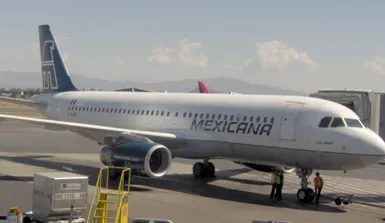
It started with a payroll. In 1924, Mexicana Airlines didn’t dream of global dominance. It just wanted to pay oil field workers in Tampico, Mexico. The cargo carrier that became the oldest airline in North America was built on a simple premise: move money and people to where the jobs were.
By 1928, the business had evolved. Scheduled services linked Mexico City to Tuxpan and Tampico. Later that year, routes extended to Veracruz and Mérida. The airline moved fast.
In 1929, it opened the Mexico City to Tampico to Brownsville route. Charles A. Lindbergh piloted the inaugural flight. Aviation royalty was already involved before the company even had a decade under its belt.
Ownership shifted constantly in the early decades. Pan American Airways bought stakes in the carrier. Mexican laws limiting foreign ownership forced those stakes down and then up. By 1967, Pan Am sold its remaining stock. The airline was effectively local again.
Government Control and Privatization
The state stepped in later. From 1982 to 1990, the Mexican government held the majority share. When it sold the airline to private investors, the market seemed ready for Mexicana’s expansion.
It wasn’t.
The mid-1990s brought an economic crisis in Mexico. The airline struggled. It couldn’t survive the downturn alone. The government bought back control.
Once back in public hands, Mexicana Airlines changed. It expanded routes. By the late 20th century, it flew to over 30 Mexican cities. It also touched airports in the United States, the Caribbean, Central America, and Europe.
The reach was impressive. The foundation was shaky.
The Final Collapse
In 2005, Grupo Posadas, a travel company, bought the airline. They saw potential. They didn’t see the storm.
The 2009 swine flu outbreak in Mexico halted travel. Borders closed. Flights grounded. Revenue vanished. The airline bled cash.
Financial difficulties mounted. The debt grew. The liquidity dried up.
In August 2010, Mexicana Airlines filed for bankruptcy protection. The news hit hard. This was a legacy carrier. It had flown since Lindbergh’s era. It had survived wars, economic crashes, and government takeovers.
It didn’t survive swine flu and bad timing.
Several weeks after the filing, operations suspended. The planes stopped. The routes ended. The oldest airline in North America was gone.