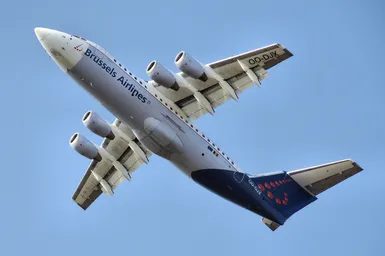
Brussels Airlines didn’t start as a brand. It started as a body. Specifically, the remains of SABENA, the Belgian national carrier that operated from 1923 until it collapsed in 2001. If you fly from Brussels to London, Paris, or New York today, you are likely boarding a plane that descends from a financial failure that cost a nation its flag carrier. Understanding this history is not just trivia. It is a case study in how legacy costs, bad mergers, and external shocks like the 9/11 attacks can wipe out a century-old institution.
The original airline, SABENA (Société Anonyme Belge d’Exploitation de la Navigation Aérienne), launched its first flight in 1924. Its early network was modest but strategic. It linked Brussels to London, Cologne, France, Scandinavia, and Switzerland. By 1925, services began in the Belgian Congo, though regular scheduled flights between Brussels and Léopoldville (now Kinshasa) did not start until 1935. World War II stalled growth, but the postwar period saw a massive expansion. The Brussels-New York route opened in 1947. By the 2000s, SABENA flew to the United States, Canada, Mexico, Africa, the Middle East, India, Southeast Asia, the Philippines, and Japan. It also held stakes in hotel chains.
“SABENA in 1998 posted a profit for the first time in a decade, its finances worsened, stemming in part from overexpansion and the decrease in air travel that followed the September 11 attacks of 2001.”
That profit was an illusion. The airline was already bleeding. In the late 1990s, financial strain forced a hand. In 1995, the Belgian government sold a 49.5 percent stake to Swissair. Swissair took operational control. The state kept 50.5 percent. This partnership was supposed to be a lifeline. It became a trap.
Swissair failed to make promised investments in 2001. Then, Swissair itself declared bankruptcy. SABENA was left stranded. It could not find other financial backing. In November 2001, SABENA went into liquidation.
The reorganization was messy. Parts of the airline survived under the name Delta Air Transport, a regional subsidiary. In 2002, this entity became SN Brussels Airlines. But the brand was still fragile. In 2007, SN Brussels Airlines merged with Virgin Express, a Belgian carrier formerly owned by Richard Branson. The result was Brussels Airlines, which began service in March 2007.
How did SABENA’s overexpansion lead to its bankruptcy?
SABENA expanded too aggressively in the late 20th century. It tried to compete with global majors on long-haul routes while maintaining a dense European network. This dual focus strained capital reserves. When demand dropped after the September 11 attacks, the airline’s high-fixed-cost structure became fatal. Swissair, its partner, was also struggling. When Swissair went under, SABENA had no independent cash flow to survive. The lesson? Growth without a stable capital partner is a risk multiplier.
Why did the Belgian government keep 50.5 percent of SABENA?
State ownership was a political choice. Belgium wanted to keep a national carrier. But state ownership often slows decision-making. It also creates “zombie” dynamics. Governments may inject funds to prevent collapse, delaying necessary restructuring. In SABENA’s case, the state stake did not prevent liquidation. It only delayed the inevitable. The final outcome was a private merger with Virgin Express, not a state bailout.
Which airlines replaced SABENA after 2001?
The direct successor is Brussels Airlines. It operates today as part of the Lufthansa Group. Its fleet includes Airbus A320 family aircraft and Boeing 787 Dreamliners for long-haul routes. The “SN” in SN Brussels Airlines stood for Société Nationale. The