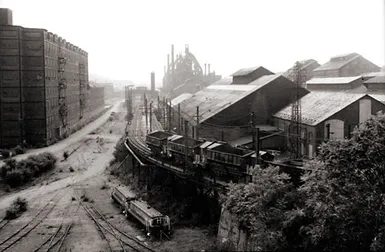
Bethlehem Steel Corporation wasn’t just a factory. It was the backbone of 20th-century American industry. The company supplied the steel beams, ships, and arms that built the modern era. But the giant is gone now. After decades of steady decline, the company filed for bankruptcy in 2001 and dissolved in 2003. Its main manufacturing facility in Bethlehem, Pennsylvania, sits as a relic of a lost industrial age.
How did a company this big disappear? The answer lies in a messy mix of foreign competition, asbestos lawsuits, and crushing legacy costs.
From Iron Rails to Naval Power
The story actually starts before the name “Bethlehem Steel” existed. In 1857, local investors founded the Saucona Iron Company. They changed the name to Bethlehem Iron Company four years later. The goal was simple. Make wrought-iron railroad rails.
By 1899, a new enterprise called Bethlehem Steel Company took over the facilities. Then came Charles M. Schwab. He was a major figure in creating United States Steel Corporation back in 1901. Schwab bought control of Bethlehem Steel Company in August 1901. It didn’t go well. The company failed in a financial scandal.
Instead of walking away, Schwab borrowed heavily. He used that debt to save the assets and absorb other companies. In 1905, he created a holding company. This new entity consolidated several operations, including the Union Iron Works in San Francisco. The result was Bethlehem Steel Corporation.
It worked. The corporation thrived during World War I. European powers needed guns, munitions, and naval vessels. Bethlehem supplied them all. The demand was endless.
Diversification Didn’t Save Them
For the first forty years, Bethlehem Steel expanded aggressively. It bought iron ore and coal properties from coast to coast. World War II kept the momentum going. But the 1970s changed everything.
Competition from foreign steelmakers became fierce. Bethlehem tried to diversify. It started producing plastics and chemical products. It began mining nonferrous ores. These moves failed to offset mounting losses. The core steel business was bleeding money.
Three specific factors brought the company down.
- Foreign competition. Cheaper imports eroded market share. First came Japan and Western Europe in the 1960s and 70s. Then South Korea and China entered the fray in the 1980s. Bethlehem could not compete on price.
- Asbestos litigation. Workers in the shipyards and mills were exposed to asbestos. Lawsuits began in the late 1970s and continued through the 1990s. The payouts ran into the millions. It drained cash reserves.
- Legacy costs. The workforce shrank, but the obligations did not. Heavy pension and health care costs strained finances. The company was paying for a past it couldn’t afford.
The End of an Era
Bethlehem’s attempts to find new income streams failed. The losses mounted. In 2001, the corporation filed for bankruptcy protection.
Two years later, it was over. Bethlehem Steel, along with more than twenty subsidiaries, was dissolved. Assets were sold off. Key names like Bethlehem Rail, Greenwood Mining, and Chicago Cold Rolling disappeared.
The surviving mills and operations were absorbed into the International Steel Group in 2003. That group later became part of ArcelorMittal. Today, that parent company is one of the world’s dominant steel producers.
The collapse of Bethlehem Steel marked a turning point. It signaled the decline of the Rust Belt. This was the region where steelmaking and manufacturing once thrived. Now, it is known for widespread unemployment and poverty. The steel is gone. The jobs are gone. Only the history remains.