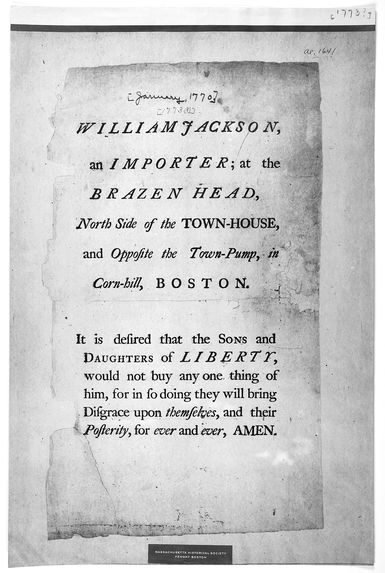
The Library of Congress has a document from January 1770 that is a public shaming notice. It asks the Sons and Daughters of Liberty not to buy anything from William Jackson, the Boston dealer. Why? Because he ignored the colonial boycott of British imports. He was an outlier in a movement that nearly brought the Empire’s economy to a standstill.
These embargoes between 1765 and 1775 were not just protests. It was an economic war. The goal was simple: to force Britain to recognize the political rights of the colonial political rights by squeezing their wallets. It started in 1765 with the Stamp Act. Then came the Townshend Acts in 1767. Colonial groups led by the Sons of Liberty and sympathetic Whig merchants organized to block the importation of English goods.
It worked. At first.
The trade of British merchants and manufacturers with the colonies withered. The pain was so real that the parliament had to give in. Both laws were repealed. The boycotts collapsed soon after. Victory? Yes. But also a trap.
Residents relied on this peaceful weapon for a decade. It was their main means of pressure against the mother country. They thought they could buy their way into rights. They were wrong.
Why boycotts ultimately failed
The failure was not in the strategy. It was in a changing global market. By the time the Intolerable Acts came into force in 1774, Britain had adapted. They had opened new markets in Europe. Colonies were no longer the sole lifeline of British traders.
When the First Continental Congress responded to the intolerable acts, it redoubled its efforts. They established both nonimport and nonexport committees. They wanted to cut off all trade. But the pressure did not lead to political change in London. The expected effect on the parliament simply did not materialize.
The British economy had diversified. Colonial boycotts lost their effectiveness.
The price of peaceful resistance
For ten years, non-importation was the main means of resistance. The colonists tried to win their demands without violence. It required discipline. It required neighbors to police each other. William Jackson was targeted because he broke that trust.
But Britain’s economic pain was only temporary. Political determination hardened in America. The boycotts created a united front among the colonists, although they failed to directly coerce Britain. They were a rehearsal for something bigger.
The failure of the boycotts showed that economic pressure alone could not break the will of the British government. Not when they had other options. The colonists had to find new ways of fighting.