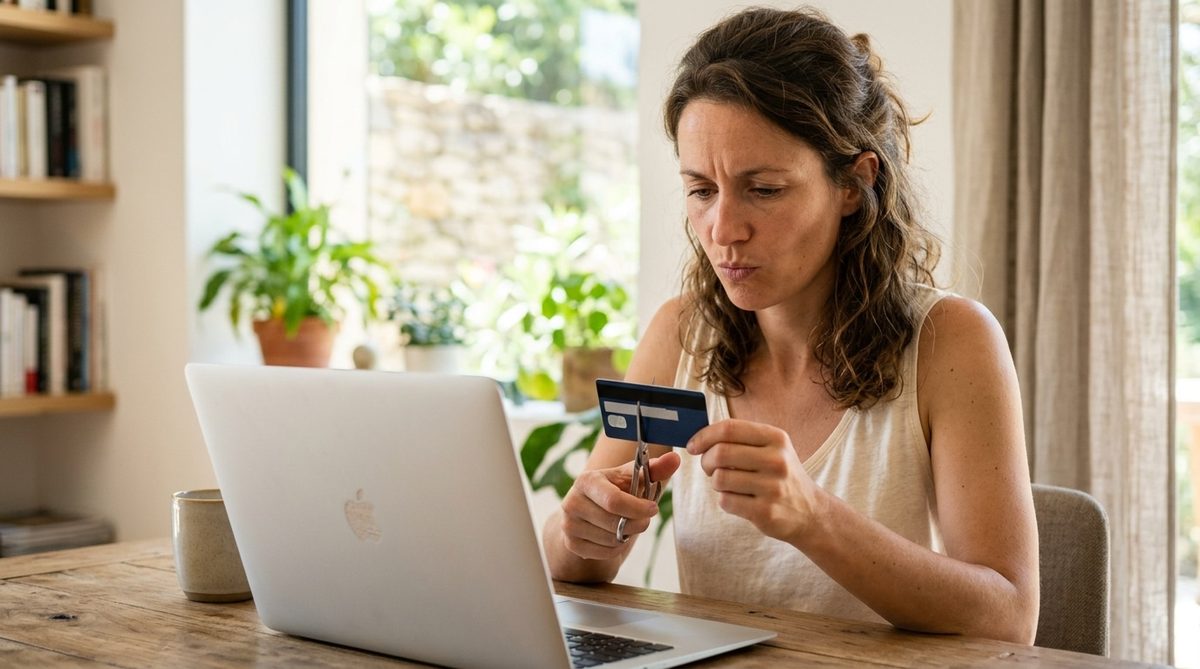
We have a ritual. You get a new bank card in the mail. You look at the old one. You grab the scissors. Snip. Through the chip. Through the magnetic strip. Into the trash.
It feels secure. It feels responsible.
It is both wrong and potentially hazardous.
That small rectangle of plastic is not just waste. It is a dense concentration of technology and rare materials. Cutting it up releases toxins. It destroys valuable metals. And frankly, it does nothing to protect your data anymore.
Financial institutions and recycling experts are asking you to stop. Leave the scissors in the drawer.
Why cutting credit cards releases toxic gases
The problem started in 2016. Banks rolled out cards with dynamic cryptograms. You know the ones. The three-digit code that changes every few seconds.
To make that work, manufacturers had to shrink a whole system into less than a millimeter of space. Inside that thin layer sits an e-paper display, a microcontroller, and a lithium battery.
You are cutting through a battery.
It is rare, but possible. If you shear the battery cell, it can short-circuit. When it reacts with the air, it releases hydrogen fluoride.
This is not a minor irritant.
Hydrogen fluoride reacts with moisture. The moisture in your eyes. The moisture in your lungs. It turns into hydrofluoric acid. This is one of the most corrosive substances in existence. It eats through tissue. It is dangerous.
Because of this hardware, these cards are no longer general household waste. They are classified as Waste Electrical and Electronic Equipment (WEEE). Just like your old toaster or broken irrigation pump. They belong in specialized recycling streams, not the gray bin.
The hidden gold in your trash
Let’s talk about value.
A standard card weighs about six grams. It looks like cheap plastic. But inside the circuitry, there is gold, copper, silver, and palladium.
Palladium is critical. Europe is currently short on it. Gold is valuable.
France alone has 112 million payment cards in circulation. If you add up the gold in all those chips, it amounts to roughly 120 kilograms of pure gold.
Right now, less than 6% of these cards are collected for recycling.
The rest go to incinerators. We are burning resources.
Recycling that gold is far cleaner than mining it. Extracting gold from existing circuits generates 93% less carbon dioxide than digging it out of the earth. We could use the recycled PVC for greenhouse frames. We could reclaim the metals for new tech. Instead, we shred it and burn it.
How to dispose of old bank cards safely
Why do we keep cutting them? Fear.
We worry about fraud. We think if someone finds the card, they can steal our identity or drain our account.
That fear is outdated.
When a card expires, the bank deactivates it on their servers. Instantly. No merchant terminal will accept a transaction.
If a card is reported lost or stolen, it is blocked immediately.
European banking rules (DSP2) now require two-factor authentication for online purchases. You need your phone. You need a code. Having the physical card is useless to a thief if they don’t have your phone.
So, do not cut it.
Cutting the card makes it harder to recycle. Robots at sorting facilities need intact materials to separate the metals safely. Shredded cards jam the machines. They create microplastics. They risk chemical spills.
Here is what you should do instead:
- Check your banking app. Confirm the old card is inactive.
- Keep the card whole.
- Return it to your bank.
Major banks like BNP Paribas, Crédit Agricole, and Caisse d’Épargne want your old cards back. Intact.
Some provide prepaid return envelopes. You can drop them off at the branch. It takes two seconds. It protects the environment. It recovers the gold.
The scissors are a reflex. But reflexes don’t have to be smart.
Next time you get a new card, look at the old one. Don’t destroy it. Return it.
The planet needs the metals. Your lungs need the air.
The hidden cost of your old power bank
You do not burn that old lithium-ion battery in the fireplace. You do not toss it in the kitchen bin with the banana peels. These are not just rules. They are survival tactics for your house and the planet.
The previous habits—throwing everything away—were destructive. Now, the shift is active. Each citizen handles the end-of-life phase of their gear differently. This matters. It protects household health. It saves natural resources. It makes the electronic recycling loop actually work.
Why does proper disposal save money and health?
Lithium-ion batteries contain cobalt, nickel, and lithium. These are valuable. They are also toxic if they leak. When you throw them in general waste, they end up in landfills. Rainwater hits them. Chemicals leach into the soil. Then the groundwater. Then your tap.
Recycling recovers those metals. You do not need to mine new ones. Mining is expensive. It is dirty. Recycling cuts that cost. It cuts the environmental damage.
“Managing the end-of-series intelligently protects household health and economizes precious natural resources.”
This is not a suggestion. It is a mechanism. The electronic recycling sector relies on clean inputs. If you mix old batteries with plastic wrappers, the whole batch gets contaminated. It gets rejected. It gets buried.
So you separate them. You take them to a designated drop-off point. Many electronics stores accept them for free. Supermarkets often have small bins for batteries. Check your local waste management website. It takes five minutes. It prevents a fire in the trash truck. It keeps cobalt out of the river.
The summer is coming. You will buy new headphones. You will get a new phone. The old ones will die. Or they will just sit there.
Do not cut them open. Do not try to harvest the battery yourself. It is not worth the risk. Leave the scissors in the drawer. Let the professionals handle the chemistry.
You want to save money? Buy less, but recycle what you have. The trade-off is simple. Convenience versus contamination. One is cheap now but expensive later. The other is a small effort with long-term payoffs.
Which side do you pick?
The choice is yours. The battery is still in your pocket.