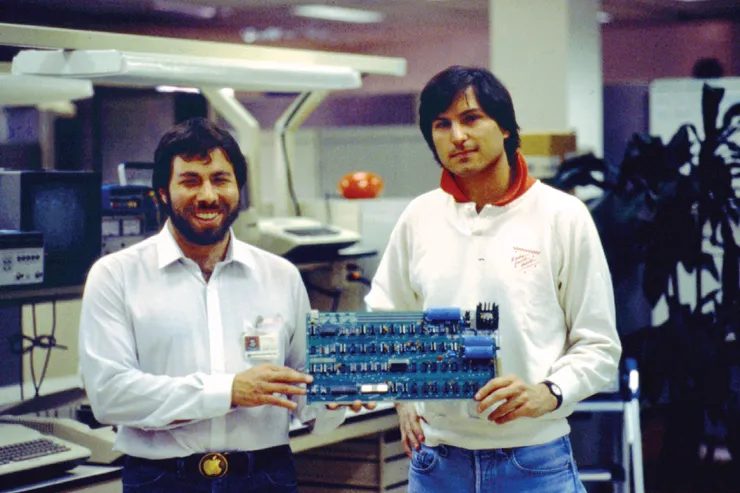
Steve Jobs and Steve Wozniak didn’t start as titans of industry. They were just two guys with a vision and a garage in 1976. Their first machine was a hobbyist project that became something far bigger. It was the beginning of the most successful personal computer company in history.
Before Apple, computers were beige boxes for engineers. The Apple II changed that. Released in 1977, it featured a plastic case and color graphics. It looked like a consumer product. People bought it. The company earned over $100 million by 1980. That same year, Apple went public.
The 1980s brought the Macintosh. It was the first PC with a graphical user interface and a mouse. The concept was revolutionary. The sales were not. The Mac flopped initially. Jobs left the company in 1985 after an internal power struggle. But the Mac found its home. It became the standard for desktop publishing.
Jobs returned in 1997. He was hired to save a sinking ship. Instead, he turned it into a profit machine. His first major move was the iMac. It was colorful. It was sleek. It was different.
The Digital Music Revolution
By 2001, the way we consumed media was about to shift. Apple launched the iPod. It was a small, white plastic brick that held thousands of songs. The device made portability seamless. But the hardware was only half the battle.
Apple introduced iTunes. It was software designed to organize digital music. It simplified the messy process of managing MP3 files. Then came the service. In 2003, Apple started selling major label songs online. They made it legal. They made it easy. The music industry panicked. Then they adapted.
Smartphones and Tablets Redefine Markets
The iPhone arrived in 2007. It wasn’t just a phone. It was a computer in your pocket. It had a touch screen. It had a browser. It had apps. It killed the dedicated MP3 player. It killed the camera phone. It killed the PDA.
Apple created a new category. The iPad followed in 2010. Tablets were niche products before this. Apple made them mainstream. They filled a gap between phones and laptops.
The Legacy of Innovation
Apple’s history is a series of leaps. From the garage to the stock market. From failed products to market leaders. Jobs returned to profitability. He introduced innovation after innovation. Each product changed consumer expectations.
The company didn’t just sell devices. It sold experiences. The integration of hardware and software set a new standard. Competitors copied the models. They never quite matched the ecosystem.
Today, Apple remains a dominant force. Its early moves dictated the rules of the modern digital world. The garage in Cupertino is now a billion-dollar headquarters. The story didn’t end with the iPhone. It continues with every new release. The next shift is coming. We just don’t know what it looks like yet.